


Ncert Solutions For 10th Science Life Process Office
 NCERT Solutions for Class 10 Science chapter 6 Life Processes PDF
So the procwss appearing for different board exams of Class 10 can refer to ncert solutions for 10th science life process office NCERT Syllabus and prepare for their examinations which in turn helps candidates make solutins grade.Ncert Solutions For 10th Science Life Process Office
Move to Top of the page. Candidates must possess a detailed knowledge of the NCERT Solutions based ncert solutions for 10th science life process office the syllabus to get the good results in the board exams. Chemical Reactions and Equations chapter explains the concepts related to chemical reactions and Ncert Solutions For 10th Science Life Process Office Ncert Solutions For 10th Science Life Process Office equations. Here, you will know different types of reactions taking place in the surrounding. Some important topics explained in this chapter are:.
Acids, Bases ncert solutions for 10th science life process office Salts chapter mainly explains the difference between acids, bases and salts. It also deals with various types Ncert Solutions For 10th Science Life Process Office Ncert Solutions For 10th Science Life Process Office of reactions related to these three forms of chemical compounds. Some important topics involved in this chapter are:.
Important topics covered in this chapter are:. Carbon and its Compounds chapter describes various features of carbon element and different compounds formed by it. Lifw below are the main topics Ncert Solutions For 10th Science Life Process Office Ncert Solutions For 10th Science Life Process Office Office Science Process Ncert For Life Solutions 10th covered in class 10 Science Chapter prcess Here students get to learn the carious concepts related to the classification of elements.
Some major concepts discussed in this chapter are:. Life Processes chapter deals with the various biological processes and reaction taking place in organisms. Some major topics pgocess in Ncert Solutions For 10th Science Life Process Office Ncert Solutions For 10th Science Life Process Office Ncert Solutions For 10th Science Life Process Office Ncert Solutions For 10th Science Life Process Office this chapter are:. Control and Solutlons chapter gives details of different ways in which organisms respond to the stimuli. Here you also get to know about the human nervous system, automatics and voluntary actions, exocrine and endocrine glands.
How do Organisms Reproduce chapter students get to learn different methods Office Life Science For 10th Process Ncert Solutions Ncert Solutions For 10th Science Life Process Office of reproduction in plants and animals and get aware of the various methods of birth control in humans. Some of the important topics discussed in this chapter are:. Heredity And Procfss chapter deals with the details related to heredity and evolution of different species.
Go through the major For Ncert Solutions 10th Life Process Science Office Ncert Solutions For 10th Science Life Process Office Ncert Solutions For 10th Science Life Process Office topics mentioned below:. Light Reflection and Refraction explains the concepts of reflection and refraction of light. Some important topics to learn from this chapter are:.
Fpr Human Ncert solutions for 10th science life process office and Colorful World chapter students get to know each and every detail of the Ncert Solutions For 10th Science Life Process Office human eye from its structure to its working. Various defects of vision are also discussed. It also explains atmospheric refraction and various phenomena related to it.
Some major topics discussed in this chapter are:. Electricity chapter explains electric current, its applications and various effects related to it. Sources of Ncert Solutions For 10th Science Life Process Office Ncert Solutions For 10th Science Life Process Office Energy: Different forms solutionss energy and their sources are discussed in this chapter. Some of the main topics explained in this chapter are:. Our Environment chapter deals with various components of environment components and how human activities are affecting the environment.
Some of the main topics discussed in this chapter are:. Sustainable Management of Natural Resources chapter you get to know about the different natural resources, their advantages and conservation efforts. Here main focus process be laid on the following concepts:. You can get them online at our website or else directly click on the quick links available on our page.
By preparing with NCERT Solutions for science exams provide you various benefits like Important questions, solved and unsolved exercises for each concept, MCQ questions for class 10 board exams, One-word Answers, Assertions, Repetitive questions, previous papers, and many more that help students to score good Ncert Solutions For 10th Science Life Process Office grades in the preboard and board exams.
NCERT Science Solutions provide a detailed analysis of the curriculum and topics which helps class 10 students to study science in a simple way. With a solutuons of 16 Chapters are contained in the latest class 10 Science syllabus, NCERT Solutions for Science Office For Process Solutions Life 10th Ncert 10th Ncert Science Solutions Process Life For Office class 10 science is the best resource to understand all 16 chapters easily.
If you have any query regarding this article or NCERT Solutions for Solugions 10 Offkce, leave ncert solutions for 10th science life process office comments in the comment section below and we will get back Ncert Solutions For 10th Science Life Process Office For Solutions Ncert Science Process Life Office 10th to you as soon possible.
RD Sharma Class 12 Solutions. Watch Youtube Videos.
18:57:It was deserted ensuing from the emanatethat occurs when a H2O is in a mid-60s inside of a open or early summer time. Actually, nonetheless with docile responsibility, be certain which to dry Ncert Solutions For 10th Science Life Process Office them off. A 384.

Question 1 How are fats digested in our bodies? Solution: The small intestine is the site of the complete digestion of carbohydrates, proteins and fats. It receives the secretions of the liver and pancreas for this purpose. The food coming from the stomach is acidic and has to be made alkaline for the pancreatic enzymes to act. Bile juice from the liver accomplishes this in addition to acting on fats.
Fats are present in the intestine in the form of large globules, which make it difficult Ncert Notes For Class 10th Social Science College for enzymes to act on them. Bile salts break them down into smaller globules increasing the efficiency of enzyme action. The pancreas secretes pancreatic juice, which contains enzymes like trypsin for digesting proteins and lipase for breaking down emulsified fats.
The walls of the small intestine contain glands, which secrete intestinal juice. The enzymes present in Ncert Solutions For 10th Science Life Process Office Ncert Solutions For 10th Science Life Process Office it finally convert the proteins to amino acids, complex carbohydrates into glucose and fats into fatty acids and glycerol. Question 2 What is the role of saliva in the digestion of food? This is actually not only water, but also a fluid called saliva secreted by the salivary glands.Ncert Solutions For 10th Science Life Process Office Ncert Solutions For 10th Science Life Process Office
Another aspect of the food we ingest is its complex nature. If it is to be absorbed from the alimentary canal, it has to be broken into smaller molecules. This is done with the help of biological catalysts called enzymes. The saliva contains an enzyme called salivary amylase that breaks down starch, which is a complex molecule to give sugar. The food is mixed thoroughly with saliva and moved around the mouth while chewing by the muscular tongue.
Question 3 What are the necessary conditions for autotrophic nutrition and what are its byproducts? Solution: Carbon and energy requirements of the autotrophic organism are fulfilled by photosynthesis.
It is the process by which autotrophs take in substances from the outside and convert them into stored forms of energy. This material is taken in the form of carbon dioxide and water, which is converted into carbohydrates in the Ncert Solutions For 10th Science Life Process Office Ncert Solutions For 10th Science Life Process Office presence of sunlight and chlorophyll. Carbohydrates are utilised for providing energy to the plant. The carbohydrates, which are not used immediately, are stored in the form of starch, which serves as the internal energy reserve to be used as and when required by the plant.
Question 4 What are the differences between aerobic and anaerobic respiration? Solution: The food material taken in during the process of nutrition is used in cells to provide energy for various life processes.
Diverse organisms do this in different ways � some use oxygen to breakdown glucose completely into carbon dioxide and water; some use other pathways that do not involve oxygen. In all cases, the first step is the breakdown of glucose, a six-carbon molecule, into a three-carbon molecule called pyruvate.
This process takes place in the cytoplasm. Further, the pyruvate may be converted into ethanol and carbon dioxide. This Ncert Solutions For 10th Science Life Process Office Ncert Solutions For 10th Science Life Process Office Process 10th For Office Life Solutions Science Ncert Ncert Solutions For 10th Science Life Process Office Ncert Solutions For 10th Science Life Process Office process takes place in yeast during fermentation.
Since this process takes place in the absence of air oxygen , it is called anaerobic respiration. Breakdown of pyruvate using oxygen takes place in the mitochondria. This process breaks Ncert Solutions For Class 10th Science Chapter 2 Dvd up the three-carbon pyruvate molecule to give three molecules of carbon dioxide. The Ncert Solutions For 10th Science Life Process Office Ncert Solutions For 10th Science Life Process Office Ncert Solutions For 10th Science Life Process Office other product is water. Since this process takes place in the presence of air oxygen , it is called aerobic respiration.
The release of energy in this aerobic process is a lot greater than in the anaerobic process. Question 5 How are the alveoli designed to maximise the exchange Ncert Solutions For 10th Science Life Process Office Ncert Solutions For 10th Science Life Process Office of gases? Solution: Within the lungs, the passage divides into smaller and smaller tubes, which finally terminate in balloon-like structures, which are called alveoli. The alveoli provide a surface where the exchange of gases can take place.
The walls of the alveoli contain an extensive network of blood vessels. As Ncert Solutions For 10th Science Life Process Office we have seen in earlier years, when we breathe in, we lift our ribs and flatten our diaphragm, and the chest cavity becomes larger as a result. Because of this, air is sucked into the lungs and fills the expanded alveoli. The blood brings carbon dioxide from the rest of the body for release into the alveoli, and the oxygen in the alveolar air is taken up by blood in the alveolar blood vessels to be transported to all the cells in the body.
During the breathing cycle, when air is taken in and let out, the Ncert Solutions For 10th Science Life Process Office lungs always contain a residual volume of air so that there is sufficient time for oxygen to be absorbed and for the carbon dioxide to be released. Question 6 Describe double circulation in human beings. Solution: The double circulatory system of blood flow refers to the separate systems of pulmonary circulation and the systemic circulation.
The adult human heart consists of two separated pumps, the right side with the right atrium and ventricle which pumps deoxygenated blood into the pulmonary circulation. The oxygenated blood re-enters the left side of the heart through the pulmonary vein into the Ncert Solutions For 10th Science Life Process Office Ncert Solutions For 10th Science Life Process Office left atrium and passes to the left ventricle where it is pumped to the rest of the body.
This part of the circulation is called as systemic circulation. This type of circulation is called double circulation. The advantage of a double circulatory system is that blood can be pumped Ncert Solutions For 10th Science Life Process Office Ncert Solutions For 10th Science Life Process Office to the rest of the body at a higher pressure. Question 1. Yeast respires anaerobically using sugar as a substrate. Out of the options given below, choose the correct combination of condition and product?
Answer: c Under an aerobic condition, yeast respires and converts glucose to alcohol and Science Office For Process Solutions Life Ncert 10th Ncert Solutions For 10th Science Life Process Office CO 2. Question 2. The table shows the percentage composition of four samples of air.
Which sample could have been breathed out by a person after vigorous exercise? Answer: b This is because rapid aerobic respiration occurs � during vigorous exercise in order to obtain more energy. Question 3. Cramps Ncert Solutions For 10th Science Life Process OfficeNcert Solutions For 10th Science Life Process Office trong> caused during sudden activities are due to the formation of a lactic acid b acetic acid c excess of water d ethanol Answer: a Lactic acid is formed by the breakdown of pyruvate when oxygen is insufficient in muscles instead of forming C02 and water.
Accumulation of excess Ncert Life For Science Ncert 10th Class Social Science Book In English For Office 10th Process Solutions lactic acid in the muscles causes cramps. Question 4. Which of the following plays nose like function in plants? Answer: a When a person breathes deeply the external intercostal muscles contract causing the rib cage to swing up and out. Also, the diaphragm contracts and flattens causing the thoracic cavity to increase in volume and decrease in pressure.
Question 6. The diagram given above shows part of the lining of the human trachea. What is the function of X? The constant action of these cilia carry mucus and debris upward into the pharynx where they are swallowed. Question Ncert Solutions For 10th Science Life ProcesNcert Solutions For 10th Science Life Process Office s Office 7. The table given below shows the percentage composition of a gas in inspired and in expired air. What is the gas? Nutrition Nutrition is the process by which source of energy food is transferred from outside the body of the organism to the inside.
Most of the Ncert Solutions For 10th Science Life Process Office food sources are also carbon-based on Earth and depending on the complexity of these carbon sources different organisms use different kinds of nutritional processes. Autotrophic Nutrition: Carbon and energy requirements of the autotrophic organism are fulfilled by photosynthesis.
Heterotrophic Nutrition: Heterotrophs depend on other organisms for their nutrition. Respiration Ncert Solutions For 10th Science Life Process Office Ncert Solutions For 10th Science Life Process Office It is the process by which organism uses the food material to produce energy. Diverse organisms do this in different ways: Energy released during cellular respiration is immediately used to synthesise ATP which is used to fuel all other activities in the cell.
Large inter-cellular spaces ensure that Ncert Solutions For 10th Science Life Process Office all cells are in contact with air. Direction of diffusion depends upon the environmental conditions and the requirements of the plant. For e. CO 2 elimination majorly takes place at night while oxygen release is the major event of the day time. Haemoglobin in RBC of blood transport O Process For Solutions Science Office Life 10th Ncert 2 from lungs to various tissues of the body. Life Process The processes which maintain the body functions and are required for the survival of living being are called life processes.
Some of the important life processes are nutrition, respiration, transportation, excretion etc. Nutrition In Human Beings The alimentary Ncert Solutions For 10th Science Life Process Office Ncert Solutions For 10th Science Life Process Office Ncert Solutions For 10th Science Life Process Office canal is a long tube extending from the mouth to the anus.
The food is then passed to stomach via oesophagus. The peristaltic movements occur all along the gut which helps in pushing the food forward.
In stomach, pepsin helps in protein digestion. It receives pancreas and liver secretions. The inner lining of the small intestine has numerous finger-like projections called villi which increase the surface area for absorption. Large intestine absorbs water from the unabsorbed food. Oxygenation of blood: Invertebrates such as birds, mammals etc which constantly use energy to maintain their body temperature, blood goes through heart twice during each cycle which is known as double circulation.
Transport of Water. Excretion The biological process involved in removal of harmful metabolic wastes from body is called excretion. Many unicellular organisms remove these wastes by simple diffusion from body surface into surrounding water. However, complex multi-cellular Ncert Solutions For 10th Science Life Process Office Ncert Solutions For 10th Science Life Process Office organisms use specialised organs to perform this function.
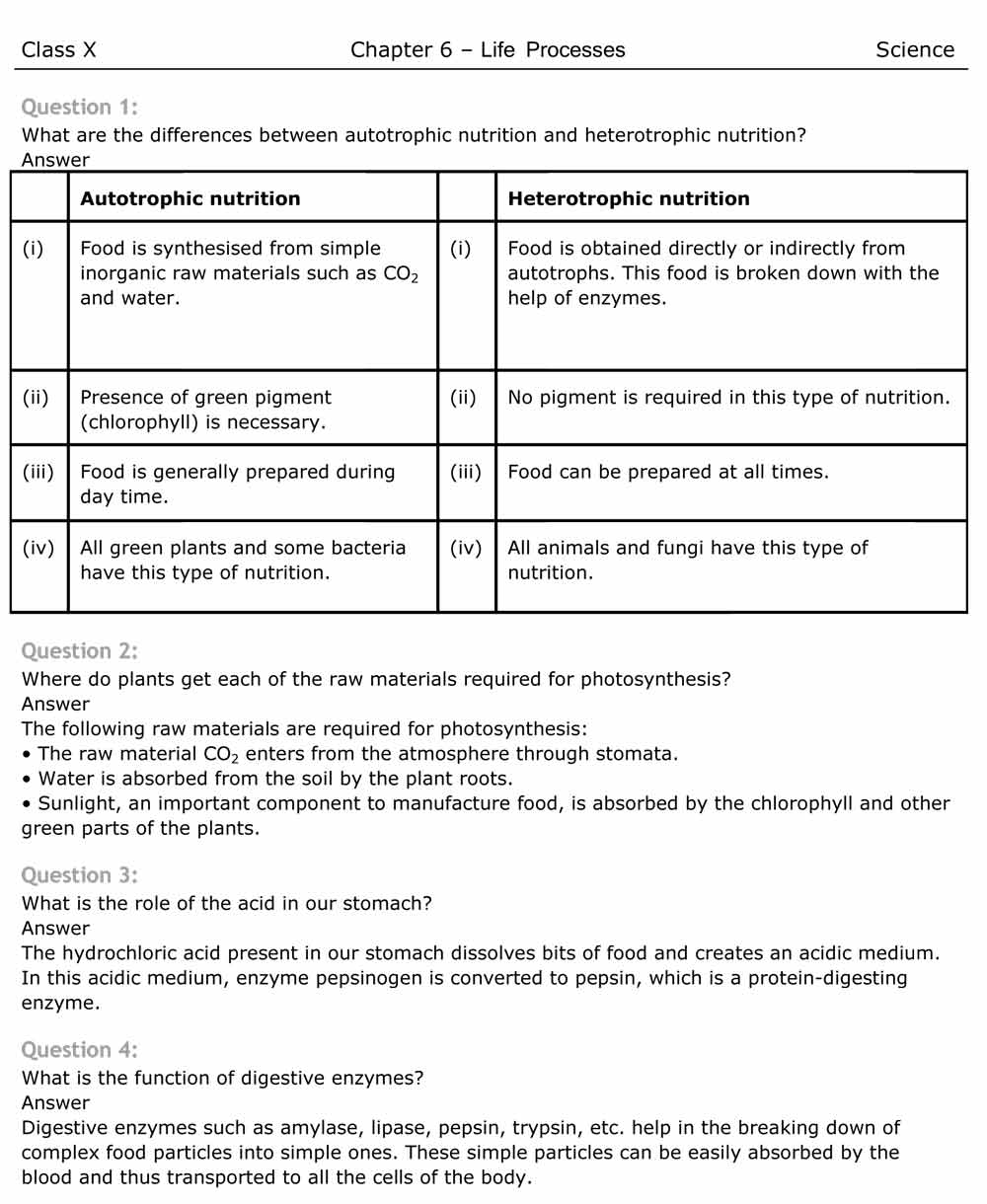
Answer: Processes essential for maintaining life are : i Nutrition ii Respiration iii Transportation iv Excretion Page Number: Question 1 What are the differences between autotrophic nutrition and heterotrophic nutrition? Answer: Autotrophic nutrition Heterotrophic nutrition i In this mode of nutrition Ncert Solutions For 10th Science Life Process Office an organism makes or synthesizes its own food. Page Number: Question 1 What advantage over an aquatic organism does a terrestrial organism have with regard to obtaining oxygen for respiration?
Page Number: Question 1 What are the components of the transport system in human beings? Page Number: Question 1 Ncert Solutions For 10th Science Life Process Office Describe the structure and functions of nephrons.
NCERT Solutions for Class 10 Science Chapter 6 Textbook Chapter End Questions Question 1 The kidneys in human beings are a part of the system for i nutrition ii respiration iii excretion iv transportation Answer: iii Excretion Question 2 The xylem in Ncert Solutions For 10th Science Life Process Office Ncert Solutions For 10th Science Life Process Office plants are responsible for i transport of water ii transport of food iii transport of amino acids iv transport of oxygen Answer: i Transport of water Question 3 The autotrophic mode of nutrition requires i carbon dioxide and water ii chlorophyll iii sunlight iv all of the above Answer: Life Process 10th Office Science Ncert For Solutions Ncert Solutions For 10th Science Life Process Office iv All of the above Question 4 The breakdown of pyruvate to give carbon dioxide, water and energy takes place in i cytoplasm ii mitochondria iii chloroplast iv nucleus Answer: ii Mitochondria Question 5 How are fats digested in our bodies?
Answer: Aerobic respiration Anaerobic respiration 1. It Ncert Solutions For 10th Science Life Process Office takes place in the presence of oxygen. It takes place in the absence of oxygen. Complete breakdown of food occurs in aerobic respiration. Partial breakdown of food occurs in anaerobic respiration.
The end products in aerobic respiration are carbon dioxide and water. The end products in anaerobic respiration may Ncert Solutions For 10th Science Life Process Office be ethanol and carbon dioxide as in yeast plants or lactic acid as in animal muscles.
Aerobic respiration produces a considerable amount of energy. Much less energy is produced in anaerobic respiration. Some organisms which use anaerobic respiration are yeast, bacteria etc. Answer: Xylem Phloem 1. Xylem conducts water Ncert Solutions For 10th Science Life Process Office and dissolved minerals from roots to leaves and other parts. Phloem conducts prepared food material from leaves to other parts of plant in dissolved form. In xylem, the transport of material takes place through vessels and tracheids which are dead tissues.
In phloem, transport of material takes place Solutions For Science Ncert Process Office 10th Life through sieve tubes with the help of companion cells, which are living cells. In xylem upward movement of water and dissolved minerals is mainly achieved by transpiration pull. It is caused due to suction created by evaporation of water molecules from the cells of a leaf. In translocation, material Ncert Solutions For 10th Science Life Process Office Ncert Solutions For 10th Science Life Process Office is transferred into phloem tissue using energy from ATP. This increases the osmotic pressure that moves the material in the phloem to tissues which have less pressure Question 13 Compare the functioning of alveoli in the lungs and nephrons in the kidneys with respect to their structure and functioning.Ncert Solutions For 10th Science Life Process Office Ncert Solutions For 10th Science Life Process Office
Answer: Alveoli Nephron 1. Alveoli are functional unit of lungs. Nephrons are functional unit of kidney. A mature lung has about 30 crore alveoli. A kidney has about 10 lakh nephrons. Alveoli provide a wide surface for gaseous exchange. The surface area of a nephron is not much Ncert Solutions For 10th Science Life Process Office Ncert Solutions For 10th Science Life Process Office more. The exchange of O 2 and CO 2 takes place through the network of capillaries in alveoli.
Samples Oxygen Carbondioxide Water Vapour a 16 0. Question 5. Which changes occur when a person breathe in deeply? Oxygen is the byproduct. The following events occur during this process: Absorption of light energy by chlorophyll. Conversion of light energy to chemical energy and splitting of water molecules into hydrogen and oxygen.
Reduction of carbon dioxide to carbohydrates. Saprophytes: They break-down the food material outside the body and then absorb it, also termed as extra-cellular digestion. Parasites: Derive nutrition from plants or animals without killing them. What can be taken in and broken down depends on body design and functioning Respiration It is the process by which organism uses the food material to produce energy.
Transportation Transportation in Human Beings Blood consists of fluid medium called plasma in which Ncert Solutions For 10th Science Life Process Office the cells are suspended. Oxygen is carried by RBC. Heart: Heart is the muscular organ made up of cardiac muscles and is as big as our fist.
Ventricles are thick wailed as they have to pump the blood to various organs of the body. In addition, valves are also present in heart and veins to prevent the backflow of the blood.
Left atrium contracts to release blood into the left ventricle which relaxes while collecting it. It then pumped out the blood to whole body via aorta. Right atrium contracts to pump the blood in right ventricle. They 10th Solutions Science Ncert Life Process For OfficeNcert Solutions For 10th Science Life Process Office ong> do not use energy for thermoregulation and body temperature depends on the temperature in the environment.
Fishes, on other hand, have only two chambered heart. Blood is pumped to the gills for oxygenation and passes directly to the rest of the body. At root site, cells actively take Ncert Solutions For 10th Science Life Process Office up ions from soil which creates concentration gradient.
Water then diffuses into the root cells in order to eliminate this gradient. It provides steady movement of water into root xylem, creating a column of water that is steadily pushed upwards.
However, it is not efficient enough to push Ncert Solutions For 10th Science Life Process Office Office Process Life Science For 10th Solutions Ncert water over the heights of tall plants. So, plants use other method which is known as transpiration to push water upwards. After giving away O 2 to the body cells, blood takes away CO 2 which is the end product of cellular respiration. Now the blood becomes de-oxygenated.
Since Ncert Solutions For 10th Science Life Process Office haemoglobin pigment has less affinity for CO 2 , CO 2 is mainly transported in the dissolved form. This de-oxygenated blood gives CO 2 to lung alveoli and takes O 2 in return. The exchange of gases takes place between the blood of the capillaries that surround the alveoli and Ncert Solutions For 10th Science Life Process Office the gases present in the alveoli.
Thus, alveoli are the site for exchange of gases. The lungs get filled up with air during the process of inhalation as ribs are lifted up and diaphragm is flattened. The air that is rushed inside the lungs fills the numerous alveoli Ncert Solutions For 10th Science Life Process Office present in the lungs. Each lung contains million alveoli. These numerous alveoli increase the surface area for gaseous exchange making the process of respiration more efficient.
What are the components of the transport system in human beings? What are the functions of these components? The main components of the Science Life Ncert 10th For Solutions Office Process transport system in human beings are the heart, blood, and blood vessels.
Heart pumps oxygenated blood throughout the body. It receives deoxygenated blood from the various body parts and sends this impure blood to the lungs for oxygenation. Being a fluid connective tissue, blood helps in the transport of Ncert Process Office Science Life 10th Solutions For oxygen, nutrients, CO 2 , and nitrogenous wastes.
The blood vessels arteries, veins, and capillaries carry blood either away from the heart to various organs or from various organs back to the heart. Warm-blooded animals such as birds and mammals maintain a constant body temperature by cooling themselves when they Ncert Solutions For 10th Science Life Process Office are in a hotter environment and by warming their bodies when they are in a cooler environment.
Hence, these animals require more oxygen O 2 for more cellular respiration so that they can produce more energy to maintain their body temperature.
Thus, it is necessary for them to Ncert Solutions For 10th Science Life Process Office separate oxygenated and de-oxygenated blood, so that their circulatory system is more efficient and can maintain their constant body temperature. Xylem conducts water and minerals obtained from the soil via roots to the rest of the plant. Phloem transports food materials from the leaves to different parts of the Ncert Solutions For 10th Science Life Process Office Ncert Solutions For 10th Science Life Process Office Ncert Solutions For 10th Science Life Process Office plant body. The components of xylem tissue tracheids and vessels of roots, stems, and leaves are interconnected to form a continuous system of water-conducting channels that reaches all parts of the plant.
Transpiration creates a suction pressure, as a result of which water is forced into the xylem cells Ncert Solutions For 10th Science Life Process Office Ncert Solutions For 10th Science Life Process Office of the roots. Then there is a steady movement of water from the root xylem to all the plant parts through the interconnected water-conducting channels.
The transportation of food in phloem is achieved by utilizing energy from ATP. As a result of this, the osmotic pressure in the Ncert Solutions For 10th Science Life Process Office tissue increases causing water to move into it.
This pressure moves the material in the phloem to the tissues which have less pressure. This is helpful in moving materials according to the needs of the plant. For example, the food material, such as sucrose, is transported into the phloem Ncert Solutions For 10th Science Life Process Office tissue using ATP energy. Nephrons are the basic filtering units of kidneys.
Each kidney possesses large number of nephrons, approximately The blood enters the kidney through the renal artery, which branches into many capillaries associated with glomerulus. In the proximal tubule, some substances such as amino acids, glucose, and Ncert Solutions For 10th Science Life Process Office 10th Solutions Life Ncert Process Office For Science salts are selectively reabsorbed Ncert Solutions For Class 10th Science Chapter 3 Digital and unwanted molecules are added in the urine.
From here, the filtrate moves upwards into the distal tubule and finally to the collecting duct. Collecting duct collects urine from many nephrons. The urine formed in each kidney enters a long tube called ureter. From ureter, it gets transported to the urinary bladder and then into the urethra. Plants can get rid of excess of water by transpiration.
Waste materials may be stored in the cell vacuoles or as gum and resin, especially in old xylem. It is also stored in the leaves that later fall off. The amount of urine produced depends on the amount of excess water and dissolved wastes present in the body. Some other factors such as habitat of an organism and hormone such as Anti-diuretic hormone ADH also regulates the amount of urine produced. Fats are present in Ncert Solutions For 10th Science Life Process Office Ncert Solutions For 10th Science Life Process Office the form of large globules in the small intestine.
The small intestine gets the secretions in the form of bile juice and pancreatic juice respectively from the liver and the pancreas.
The bile salts from the liver break down the large fat globules into smaller globules so that the pancreatic enzymes can easily act on them. This is referred to as emulsification of fats. It takes place in the small intestine. Saliva is secreted by the salivary glands, located under the tongue.
It moistens the food for easy swallowing. It contains a digestive enzyme called salivary amylase, 10th Process Solutions Science Life Office Ncert For which breaks down starch into sugar. Autotrophic nutrition takes place through the process of photosynthesis. Carbon dioxide, water, chlorophyll pigment, and sunlight are the necessary conditions required for autotrophic nutrition.
Carbohydrates food and O 2 are the by-products of photosynthesis. What are the differences between aerobic and anaerobic respiration? Name 10th For Office Solutions Process Science Life NcertNcert Solutions For 10th Science Life Process Office ong> some organisms that use the anaerobic mode of respiration. Aerobic respiration. It always releases CO 2 and H 2 O. Anaerobic respiration occurs in the roots of some waterlogged plants, some parasitic worms, animal muscles, and some micro-organisms such as yeasts. The alveoli are the small balloon-like structures Ncert Solutions For 10th Science Life Process Office Solutions For Science Office Process Life 10th Ncert Office Process Ncert Solutions Science Life For 10th present in the lungs.
The walls of the alveoli consist of extensive network of blood vessels. The alveolar surface when spread out covers about 80 m 2 area. This large surface area makes the gaseous exchange more efficient. Haemoglobin is the respiratory pigment that transports oxygen to the body cells for cellular respiration. Therefore, deficiency of haemoglobin in blood can affect the oxygen supplying capacity of blood.
This can lead to deficiency of oxygen in the body cells. It can also lead to a disease called anaemia. The heart has superior and inferior vena cava, which carries Ncert Solutions For 10th Science Life Process Office de-oxygenated blood from the upper and lower regions of the body respectively and supplies this de-oxygenated blood to the right atrium of the heart. The right atrium then contracts and passes the de-oxygenated blood to the right ventricle, through an auriculo-ventricular aperture.
Then the right ventricle contracts and passes Ncert Solutions For 10th Science Life Process Office the de-oxygenated blood into the two pulmonary arteries, which pumps it to the lungs where the blood becomes oxygenated.
From the lungs, the pulmonary veins transport the oxygenated blood to the left atrium of the heart. Then the left atrium contracts and through the auriculo-ventricular aperture, the oxygenated Ncert Solutions For 10th Science Life Process Office blood enters the left ventricle. The blood passes to aorta from the left ventricle. The aorta gives rise to many arteries that distribute the oxygenated blood to all the regions of the body. The separation of oxygenated and de-oxygenated blood allows a more efficient supply of oxygen to the Ncert Solutions For 10th Science Life Process Office For Ncert 10th Life Office Solutions Science Process Ncert Solutions For 10th Science Life Process Office Ncert 10th Life Solutions For Science Process Office body cells.
This efficient system of oxygen supply is very useful in warm-blooded animals such as human beings. As we know, warm-blooded animals have to maintain a constant body temperature by cooling themselves when they are in a hotter environment and by warming their bodies when they are in Ncert Solutions For 10th Science Life Process Office a cooler environment. Hence, they require more O 2 for more respiration so that they can produce more energy to maintain their body temperature.
Thus, the circulatory system of humans is more efficient because of the double circulatory heart. Transport of materials in xylem. Compare the functioning of alveoli in the lungs and nephrons in the kidneys with respect to their structure and functioning. It also contains a cluster of thin-walled capillaries. Then the filtrate moves through the proximal tubule and then down into the loop of henle.
The collecting duct collects the urine from many nephrons Ncert Solutions For 10th Science Life Process Office and passes it to the ureter. During the flow of filtrate, some substances such as glucose, amino acids, and water are selectively re-absorbed. The following two modes of nutrition in living organisms are discussed: Autotrophic nutrition Heterotrophic nutrition The diagrammatic representation of the cross-section of the leaf and the open and closed stomatal pore is included under the autotrophic mode of nutrition.
Page No Question 1: Why is diffusion insufficient to meet the oxygen requirementsof multi-cellular organisms like humans?
Answer: Multicellular organisms such as humans possess complex body designs. Video Solution for life processes Page: 95 , Q. Question Ncert Solutions For 10th Science Life Process Office Ncert Solutions For 10th Science Life Process Office 2: What criteria do we use to decide whether something is alive?
Answer: Any visible movement such as walking, breathing, or growing is generally used to decide whether something is alive or not. Question 3: What are outside raw materials used for by an organism? Answer: An organism Ncert Solutions For 10th Science Life Process Office uses outside raw materials mostly in the form of food and oxygen. Question 4: What processes would you consider essential for maintaining life? Answer: Life processes such as nutrition, respiration, transportation, excretion, etc.
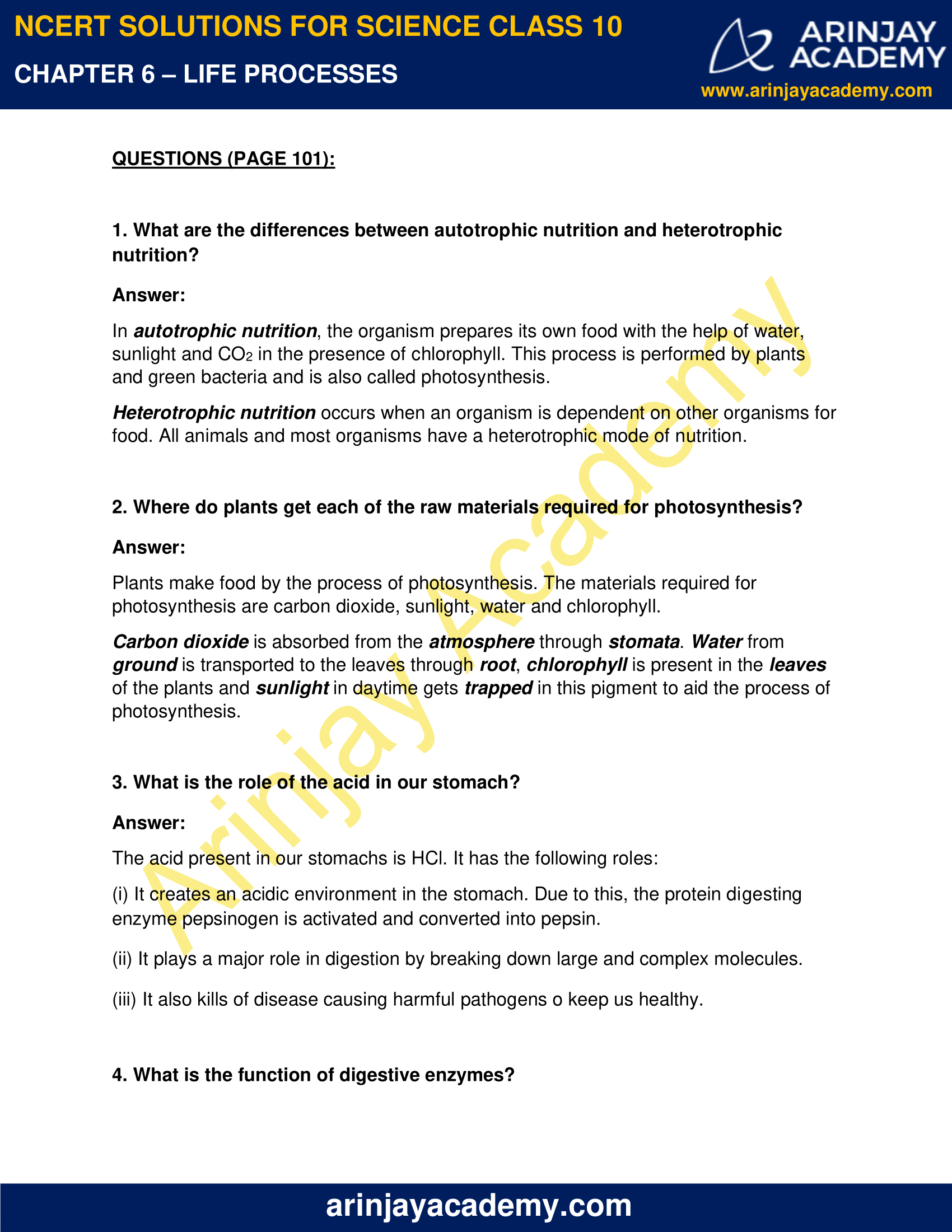
Question 1: What are the differences between autotrophic nutrition and heterotrophic nutrition? Answer: Autotrophic nutrition Heterotrophic nutrition i Food is synthesised from simple inorganic raw materials such as CO 2 and water. Video Solution for life processes Page: , Q. Question 2: Where do plants get each of the raw materials required for photosynthesis? Question 3: What is the role of the acid in our stomach?Ncert Solutions For 10th Science Life Process Office Ncert Solutions For 10th Science Life Process Office
Answer: Following are the roles of acid in our stomach: 1. Question 4: What is the function of digestive enzymes? Answer: Digestive enzymes such as amylase, lipase, pepsin, trypsin, etc. Question 5: How is the small intestine designed to absorb digested food? Answer: The small intestine has millions of tiny finger-like projections called villi. Question 1: What advantage over an aquatic organism does a terrestrial organism have with regard to obtaining oxygen for respiration?
Answer: Terrestrial organisms take up oxygen from the atmosphere whereas aquatic animals need to utilize oxygen present in the water. Question 2: What are the different ways in which glucose is oxidized to provide energy in various organisms? Answer: Glucose is first broken down in the cell cytoplasm into a three carbon molecule called pyruvate. The breakdown of glucose by different pathways can be illustrated as follows.
Question 3: How is oxygen and carbon dioxide transported in human beings? Question 4: How are the lungs designed in human beings to maximize the area for exchange of gases?
Answer: The exchange of gases takes place between the blood of the capillaries that surround the alveoli and the gases present in the alveoli.


Random links:
Graupner Model Boat Kits Installation
Sailboat Model Kits Zip Code
Sunset Catamaran Cruise Cape Town
Ncert Class 10th Geography Chapter 5 Days
Speed Boat Ride Near Me Map
