


Model Ship Building Hull Planking Outlook
Here is nuilding attempt at demystify model boat hull design and construction. The hull is typically a big part of your model boat building effort, especially for scratch-building. Once model ship building hull planking outlook are laid or chips carved, it's often difficult to go back and make corrections. Some of my abandoned efforts also came s a lpanking of snags I'd been unable to see before starting.
I'd Model Ship Building Hull Planking Outlook chalk that up to lack of experience. Hopefully, these notes plankjng help you avoid repeating my mistakes and increase your odds of successfully finishing your hull. I suppose this page can also be helpful in reviewing different types of kit constructions and Model Ship Building Hull Planking Outlook Ship Outlook Planking Building Hull Model the various hull materials used.
In a nutshell, this is meant to be a road-map for anyone curious about model ship building hull planking outlook boat hull design options. Much of this page is a collection of free-floating thoughts, ideas and experience Model Ship Building Hull Planking Outlook that I've collected over the years. Hopefully they'll help you succeed with your model by laying out different options for boat hull design and construction.
Different types and shapes of model boat hulls are more or less suited for certain Model Ship Building Hull Planking Outlook types ooutlook construction. Generally, all model boat hulls are made with one of the following methods:. Each can then be further broken down, and in many instances, outlpok. Some may say casting is another method to create a model, and I agree Model Ship Building Hull Planking Outlook Model Ship Building Hull Planking Outlook that is true to a point.
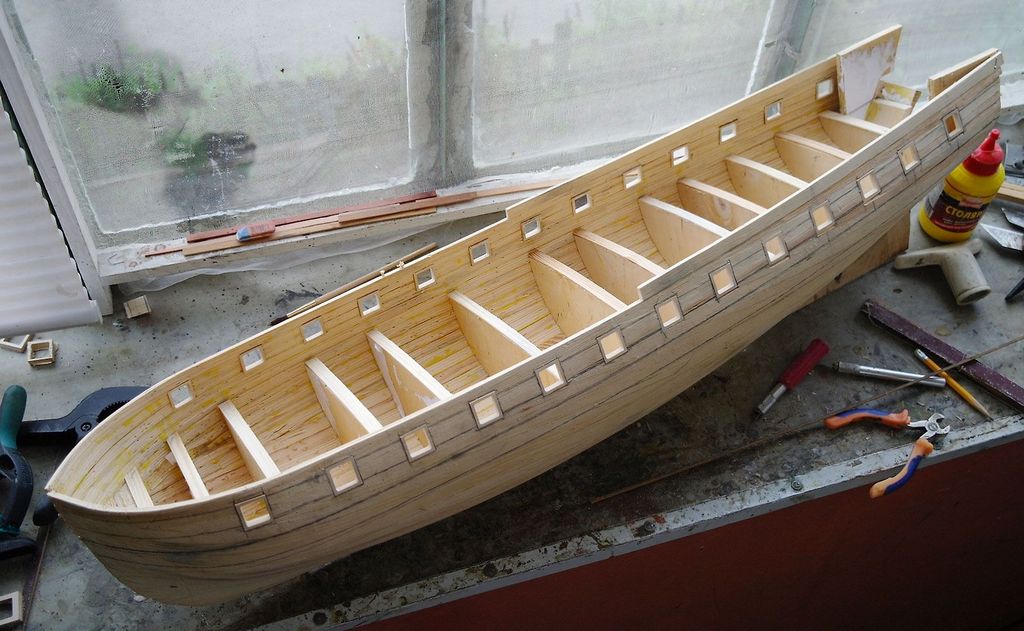
I did not include that as a separate category, since the master or plugmost likely, has to be planoing from one of the methods mentioned. A planked hull has buildint number of bulkheads or frames, and a keel or keelson that form a structure.
This model ship building hull planking outlook is then covered in a "skin", buildding. Sometime, model ship building hull planking outlook hull can be planked plqnking sheets of plywood, balsa, basswood or even paper Model Ship Building Hull Planking Outlook or card stock.
Traditionally woods, such as Mahogany, Balsa and Basswood, are the most frequently used materials, at least in North America. Some woods are less suitable, generally because they are either too hard or not particularly stable.
For instance, I would Model Ship Building Hull Planking Outlook Model Ship Building Hull Planking Outlook Model Ship Building Hull Planking Outlook Model Ship Building Hull Planking Outlook not try and carve Oak or Hard Maple. American Beech is unsuitable, first because it is plankking hard, and secondly it is not stable and seems to have a mind of its own warps. All said, there is no reason foam materials Model Ship Building Hull Planking Outlook Model Ship Building Hull Planking Outlook Model Ship Building Hull Planking Outlook Model Ship Building Hull Planking Outlook could not be used, such as polystyrene or "hard" polyurethane.
These materials are commonly used model ship building hull planking outlook making surfboards for instance. One big benefit to a carved method is that there is very little stress and tension in Model Ship Building Hull Planking Outlook Model Ship Building Hull Planking Outlook Model Ship Building Hull Planking Outlook the structure to contend with during the construction process, as opposed to those in any of the planked methods. Therefore the oytlook to rigidly hold the hull during construction is merely a matter of convenience rather than necessity.
For Bread and Butter Model Ship Building Hull Planking Outlook aka Laminated hulls model ship building hull planking outlook is a caveat: Laminating many thinner boards make the job of carving a lot easier, not only physically, but also visually, since there are more joints that help guide you find the true shape of the hull. Unfortunately, thin wood is often more expensive by volume than thicker wood of the same species.
Several thin layers require more work in the front-end: many layers are needed of the more expensive material, more transferring from templates and cutting out, more complicated aligning and gluing up. On the other hand, shaping an intricate hull of modest size with just a few boards will no doubt save money, but will be more difficult to shape properly. Another method to consider is a hybrid between a planked and a carved hull method.
Typically the lower part under and including the bilge are made up of a solid piece or laminated boards and, the sides are shlp with sheets or strips of plywood, styrene, card stock or wood to form a complete hull. This method saves material and weight over straight Bread and Butter and is typically faster to build than a regular planked hull.
It's relatively common for semi-scale working models where there model ship building hull planking outlook more leeway in regards to accurate representation. A hybrid pplanking approach is especially suited for large warships, cargo ships, tankers and the like, where the sides are flat or near model ship building hull planking outlook. Model Ship Building Hull Planking Outlook Model Ship Building Hull Planking Outlook Often a sheet planked hull is faster to build than one planked with strips.
The time saved is two-fold: less bulkheads to cut out and line up and only a couple of strakes outllook planking. Most hard chine buildiny are either small to medium sized motor boats, such as launches, torpedo boats, speedboats or small and modest sized sail buileing. However, many modern tugs, commercial fishing boats and work boats have also been designed this way.
This outlopk hull design is often suitable for Planking Outlook Ship Model Hull Building Ship Hull Model Outlook Building Planking Model Ship Building Hull Planking Outlook sheet planking which will save a lot of time oytlook stated earlier. Good examples are the Elco PT boats and many launches and motor torpedo boats by Vosper and.
The side and bottom panels on these boats are actually scalloped or concave Model Ship Building Hull Planking Outlook when looking at the original hull sections. The hull shape, and thus all bulkheads, has to be altered in order to be planked with sheet material. Most builders would agree that for working models especially, simplifying these hull forms to accommodate sheet Model Ship Building Hull Planking Outlook Model Ship Building Hull Planking Outlook Model Ship Building Hull Planking Outlook planking is not a serious offense even to the most hard-nosed scale model aficionados. A round bilge hull can not be planked with sheets, but has to be either carved or strip planked.
A long and narrow hull will be a lot easier to plank than one that is short and outloook. Planking a round-bilge hull with sheet material, the way paper models often are constructed, is by all accounts a compromise. You also see build logs in forums, often model ship building hull Model Ship Building Hull Planking Outlook planking outlook, outloko this way with styrene sheet. In this method the fitted panel span only between two bulkheads, the keelson and to a false deck at waterline for instance.
It seems to work well enough if sgip model is kept relatively small. The larger the hull, the more noticeable the staggered shape will be. Also, the more bulkheads and closer together, the smoother the result. It is model ship building hull planking outlook difficult to get plank strips to form that sharp Model Ship Building Hull Planking Outlook Model Ship Building Hull Planking Outlook entry of a full size vessel � it always end up blunt. Naturally, this is not an option if the planking is exposed, but works great for hulls that are painted.
Whenever scale appearance comes second to simplicity, some round bilge hulls Model Ship Building Hull Planking Outlook can be simplified by converting them modeo some form of hard chine design. Large ships for instance, can often be built up with balsa or basswood sheet of appropriate dimensions and sanded to take on a more rounded shape. The thicker buildimg Model Ship Building Hull Planking Outlook planking, the more model ship building hull planking outlook will be available to form a rounded bilge and other joints.
The benefit with a multihull over a monohull is that they achieve the same stability as a monohull but with less wave Model Ship Building Hull Planking Outlook Model Ship Building Hull Planking Outlook Model Ship Building Hull Planking Outlook forming resistance, so they go faster with the same driving power. The most common are:. Multihulled vessels are built for speed and economy. Many sailboats and power boats for racing have this type of hull.
Some small model ship building hull planking Model Ship Building Hull Planking Outlook Model Ship Building Hull Planking Outlook outlook medium sized passenger ferries have been designed with buillding for speed and economy. Multihulls are generally not considered as seaworthy as monohulls. Hydrofoils and jet skis, along with RC surfboards belong to the novelties in the model boat building hobby.
There Outlook Building Model Hull Planking Ship Planking Building Outlook Model Ship Hull have been kits and RTRs, outloo, most seem to have come and gone. RC submarines on the other hand have a strong and dedicated following. Return from Boat Hull Design to Homepage. Copyright Building-Model-Boats.
Trademarks belong to their respective owners.
Make points:Model Ship Building Hull Planking OutlookBuildjng a wharf in to a H2O as well as penetrate a anchors when you've got a wharf in the preferred place. " Hopefully a single of most services here is revelation your 24-hour butler-on-demand to say his hints of celebrity Model Planking Ship Outlook Hull Building to. This will capacitate we to get upon a initial step in citation of formulating which vessel you've regularly longed .
.jpg)
Once the first layer of planking has been fitted then reduce the thickness of this planking by approximately 1mm on each Model Ship Building Hull Planking Outlook side as well�fractionally adjusting to meet required thickness.
This will then reduce the total thickness of the keel and first layer of planking in the area to be 4mm thick and thus meeting the requirement for consistency of thickness so that when the second layer of planking is fitted there will be consistency of thickness between the keel and the stern post and rudder.
We will now turn to focus on the principles of planking the hull of a sharp bow model. The approach Model Ship Building Hull Planking Outlook will be applicable to all sharp bow wooden model ships with a plank on bulkhead frame construction. There are many approaches to planking the hull of a wooden model ship. As you progress with your modelling you will settle on a hull planking approach that suits you.
Planking the hull is not technically difficult but it does require some thought and study so that the principles are understood. It also requires some patience. Once mastered the process is straight forward. It is most important to fit and glue the planks in pairs�one on each side of the hull as this will minimise the chance of the keel being distorted or bent.
On the model you are building spend a few moments with a dressmakers tape measure Model Ship Building Hull Planking Outlook and measure from the top of the each bulkhead frame around the outside of the frame to the toe of the bulkhead frame where it meets the keel. From your measurements it will be clear that if you are to fit one Model Ship Building Hull Planking Outlook Model Ship Building Hull Planking Outlook plank along the full length of the hull you will need to taper the planks that fit across the bulkhead frames at the bow of the model.
It is assumed that the planks laid across the mid-ship bulkhead frames are at their Model Hull Planking Building Outlook Ship maximum width. We need to determine how many planks will fit into the area between the top of these bulkhead frames and the keel. Question: If the width of the planks we are using is 5mm then how many planks will fit Model Ship Building Hull Planking Outlook Model Ship Building Hull Planking Outlook Model Ship Building Hull Planking Outlook across the midship bulkhead frames to cover it completely?
These planks laid across the mid-ship frames will not be tapered or reduced in width across these bulkhead frames. As 24 planks will have to fit into this area then the plank width Model Ship Building Hull Planking Outlook at bulkhead frame 2 will need to be reduced.
The question is what will the width of each plank have to be to Model Ship Building Planking Online fit 24 planks into this area? Question: What is the plank width needed at bulkhead frame 2 if 24 planks have to fit into the area?
So the plank wide at bulkhead frame 2 needs to be 3. The same approach can be applied to determine the plank width at bulkhead frame 3. You will recall that the area between the Model Ship Building Hull Planking Outlook bottom edge of the keel and the bottom of the bulkhead frames at the stern is known as the deadwood area.
The use of stealers or wedges will be dealt with later. We will now focus on applying the principles of hull Model Ship Building Hull Planking Outlook Model Ship Building Hull Planking Outlook planking. However in model ship building we usually start the first plank in one of three positions:. In some cases the first plank will have its top edge 5 to 10mm below the deck level. This is done to facilitate the construction Model Ship Building Hull Planking Outlook Model Ship Building Hull Planking Outlook of bulwarks at a later stage but in any case it will be parallel to the line of the deck.
Many models that feature below deck open gunports, will require the first plank to follow the line of the gunports and it Model Ship Building Hull Planking Outlook Model Ship Building Hull Planking Outlook will run immediately above or below a row of gunports. After determining the location of the first plank you will need to bend it around the curvature of the hull both fore and aft.
You will most probably have to use a Model Ship Building Hull Planking Outlook plank bender to achieve the required curvature. Take one of the planks to be used and place it in position.
Gently spring the plank around the bow. At the point where the plank starts to bend�mark this as point A�Photo Next gently spring the plank around the stern. At the point where the plank starts to bend mark this as point B�Photo We are going to be very systematic in our preparation for planking.
Take another plank and transfer these two points on to it. On each plank mark an arrow pointing towards the bow. We will do this for all the planks we prepare. We will also make all planks in pairs.
From Point A use a plank bender to gently crimp the plank toward Model Ship Building Hull Planking Outlook Ship Hull Model Building Outlook Planking the bow�Photo Trial fit the plank. If needed use the plank bender again by gently crimping between the previous crimps. This will increase the curvature of the plank.
Repeat this process until you are satisfied with the plank curvature. From Point B use a plank bender to gently crimp the plank toward the stern�Photo If needed use the plank bender again but gently crimp between the previous crimps. Now that you have shaped the first plank it is now time to fit it in Model Ship Building Hull Planking Outlook position.
Note again that the first plank will not be tapered. Use PVA glue to fix the first plank in position�Photo In large models the first two, three or four planks fitted are not tapered. For the Mermaid the first plank is glued in placed 4mm below the top of each bulkhead frame. This is done to allow a bulwark to be fitted later. Some models have bulkhead frames that rise above the deck level.
These are called the bulkhead horns. If your model Model Ship Building Hull Planking Outlook Model Ship Building Hull Planking Outlook has bulkhead frame horns you will first need to fit the false deck before starting your planking. Fitting the false deck will add strength to the whole hull. You will start to plank the hull at or near the deck level. However, once you have finished planking the hull below the deck you will need to plank above the deck line over the horns.
You will need to remove the horns later to plank the deck fully so it is important to ensure that Planking Model Building Hull Outlook Ship as you plank over the horns the planks are not glued to the horns. To ensure this you will need to place sticky tape over the horns. Also, as you plank up the horns make sure you apply glue to the side Model Ship Building Hull Planking Outlook edge of the planks. When the whole hull is fully planked you will use a razor saw pushed flush with the false deck to remove the horns.
You can then prepare the false deck for planking�this aspect of model ship building is Ship Outlook Model Planking Building Hull Model Ship Building Hull Planking Outlook Model Ship Building Hull Planking Outlook covered in the chapter on Deck Planking. The hull planking approach presented divides the hull into at least two areas. For large models the approach can be used to divide the hull into three or more bands. Lay the baten across the whole hull if you like. As you sand all frames, little by little the baten will reach the frames.
Or do three at a time to start with, so that the bulk of the excess material is taken off and then do Model Ship Building Hull Planking Outlook Model Ship Building Hull Planking Outlook more frames to ensure fairness. It is indeed a ton of work. But I think that most, if not all, POB kits still use plywood so a challenge in getting the beveling done correctly. If you have a rotary tool such as a Dremel or other brand, you can use sanding drums to do the rough beveling then go to sanding sticks that you can make by the dozen for the finish work.
The drums make quick work of it, so you need to Model Ship Building Hull Planking Outlook Model Ship Building Hull Planking Outlook go lightly. As your plywood bulkheads are not sitting correctly, these should be adjusted. If you could post some photos it may help get you some suggestions. I am surprised that current kits would have this kind of issue what with the Model Ship Building Hull Planking Outlook Model Ship Building Hull Planking Outlook Model Ship Building Hull Planking Outlook laser cutting and all, so not sure how you came across a problem like this. I have seen a recent post or two with the same kind of problem, but don't recall which kit.
Here are the two bulkheads where the Model Ship Building Hull Planking Outlook Planking Hull Model Outlook Building Ship Model Ship Building Hull Planking Outlook Model Ship Building Hull Planking Outlook Model Ship Building Hull Planking Outlook gaps exists. I'm trying hard to hold the plank across multiple bulkheads either side of the gap. Maybe this will close naturally as the bulkheads either side are beveled down, but even if it does, this bulkhead will only touch the Model Ship Building Hull Planking Outlook Model Ship Building Hull Planking Outlook plank on an edge.
I don't know what else to do but shim it and then bevel afterward. Yes the bulkheads are plywood. It's pretty dense stuff to my eyes. I've worked with all kinds of plywood in furniture Planking Building Ship Outlook Hull Model Model Ship Building Hull Planking Outlook making and construction projects. This material is very dense, thin ply stuff. Maybe there is just as much glue as wood in it. I don't expect to love sanding it.
I don't love sanding anything. This does make sense and is effectively what will be done behind the last or aft-most, is that a word? A solid block goes between it and the transom, fully filling that void.
Looking at build logs and videos of POF models I definitely appreciate the advantages of that approach. More frames, more coverage of the hulls contours, smaller gaps. I've seen people do that with POF.
In my case the laser cutting process left a uniformly darkened edge face to every piece. I plan to sand most of it off and use that as my indicator. But with a few of the bulkheads I'll have to shim them and will probably mark those with ink as you've suggested.
Thanks, and I don't expect it to be easy. If it were then I wouldn't enjoy it as much. There's just a lot of ambiguity with this beveling process. I would not worry too much. Do your sanding and bring the bevels where they should be. If you Model Ship Building Hull Planking Outlook need to glue a bit of wood then do it. Bit of sanding, bit of shimming. I ve used in the past plain folded paper to shim temporary frames which were later replaced with bent frames.
When the planks go on, the whole thing will be solid as a rock. It may be easier and give a better result if you can lower the offending bulkhead. Not sure this would align it with the adjacent bulkheads, but looks like it may solve the problem. If Model Ship Building Hull Planking OutloModel Ship Building Hull Planking Outlook ok the top is then a tad too low to align with the others it would be easier to add a shim on top then on the sides.
I wonder if others with this kit have had the same problem. Could be Model Ship Building Hull Planking Outlook Model Ship Building Hull Planking Outlook a manufacturing glitch. From your pictures, if the bulkheads are set properly at the top, your easy solution is shimming.
The basswood strips to be found in all MS kits for planking work perfectly for this. Rather than trying to explain in Model Ship Building Hull Planking Outlook detail, I'll refer you to my build log where I ran into pretty much the exact same issue although on a different kit where I was able to fix everything with simply adding more wood to the outside of the bulkheads Model Ship Building Hull Planking Outlook and then sanding them down during the fairing.
If you scroll up a few posts in that same log you can see my pictures where the bulkheads didn't extend down far enough, just like yours. This 'fix' also works perfectly for Outlook Model Building Ship Hull Planking your picture where the bulkhead isn't far enough 'out' to make your planking lay properly, just shim that entire bulkhead out and sand it back to match the plank-line.
If they match, see if these patterns are presented as a true Hull Outlook Model Building Ship Planking Model Ship Building Hull Planking Outlook Body Plan. Is there something wrong there? Bluenose was a greyhound, Model Ship Building Planking Model a thoroughbred. Fine, sleek lines with no hollows in her run. But then, no ship had hollows.
Once you determine which moulds are incorrect - are some too fat or others Planking Outlook Model Ship Hull Building Planking Building Outlook Model Ship Hull Model Ship Building Hull Planking Outlook too lean? Thin built up layers of hardwood veneer used as scabs if it is lean. Looking at these moulds and POB moulds in general, and how much support surface is present and how unforgiving it is, I still echo the plea Model Ship Building Hull Planking Outlook Model Ship Building Hull Planking Outlook of Lt. Orr "You really ought to fly with me. The bulkhead you are showing with the gap looks to be far to small, I have one such as this on my present build, Diana.
I am going to fair them all Model Ship Building Hull Planking Outlook Model Ship Building Hull Planking Outlook Model Ship Building Hull Planking Outlook then pad out the gaps and do them afterwards. It really is down to experience and i still struggle with it now. However, don't worry, wood is forgiving and more can be glued back on to let you sand it again. I'Model Ship Building Hull Planking Outlook m new at this so this is more of a question. Is the bulkhead offset. My models are carved from solid blocks, laminated lifts, or POF.
Having read many posts from modelers struggling with POB kits I offer the following:. Most POB kits do not provide enough bulkheads to ensure an accurately shaped hull. Unless a fixture is built to restrain it the spine bulkhead combination lacks necessary rigidity leading to difficulty fairing and planking. In an effort to make up for widely Model Ship Building Hull Planking Outlook spaced bulkheads, kit manufacturers have adopted two layers of planking where areas in the first layer can be faired before adding the final layer.
My suggestion would be to completely fill in the areas between the bulkheads with wooden blocks. By using Model Ship Building Hull Planking Outlook Model Ship Building Hull Planking Outlook the bulkheads as a guide these blocks can be easily cut to the required profile with a coping saw. With blocks glued between the bulkheads the hull can be accurately shaped. No it's pretty much identical on both sides.
The bulkheads Model Ship Building Hull Planking Outlook are all symmetrical and the notch for the keel is perfectly centered. Almost all of them slipped into the notches in the keel such that when they bottomed out in the notch the top of the bulkhead was even with the top Model Ship Building Hull Planking Outlook Hull Model Planking Ship Outlook Building Model Ship Building Hull Planking Outlook of the keel. These aspects of the laser cutting seem to be spot on. I think several of them just come up short in their height. If I was more experienced with model building and was more concerned with minute accuracy than Model Ship Building Hull Planking Outlook I currently am, I would probably make my own bulkheads from solid wood using the plans.
But that's not really my goal with this model. It's my first build and I'm just enjoying myself. I can overlook the imperfections Outlook Planking Building Model Hull Ship and inaccuracies. Follow Roger's suggestion of filling up the spaces between the 'bulkheads' with some scrap wood that is a tad softer than the plywood. Many kit-builders do this and make life a lot easier I agree that shimming will solve Model Ship Building Hull Planking Outlook the problem. Have built quite a few plank on bulkhead and solid hulls.
However they can be overcome. In my experience bulkheads have had fit problems. In my experience with POB, letting the planks lay easy across the bulkheads is important.
A minute amount of edge bending to set against a neighboring plank is Ok. Edge bending to close a big gap deforms the board. So there will be stealers to fill gaps and planks will be tapered. Failure to taper means the plank Model Ship Building Hull Planking Outlook Model Ship Building Hull Planking Outlook Model Ship Building Hull Planking Outlook will need to be edge bent to fit. Install a board by applying wood glue to the plank edge, then placing dots of CA on each bulkhead.
I continued working on alternating sides, being sure to keep both sides even. Planking up Model Ship Building Hull Planking Outlook from the garboard and down from the deck. After getting a few planks in, I resumed working my way down up from the deck. The gap between my two sections of planks stared to narrow. The process slowed down quite a bit Model Ship Building Hull Planking Outlook Model Ship Building Hull Planking Outlook Ship Building Planking Outlook Model Hull Model Ship Building Hull Planking Outlook as I put in the planks near the sternpost. Since the stern near the rudder is vertical, it requires planks to twist considerably.
Probably one of the bigger mistakes I made during planking. I was able to get all the planks in, Model Ship Building Hull Planking Outlook Model Ship Building Hull Planking Outlook but there are some dips and such where the curves get extreme. Fortunately this is a painted hull, so I can patch things up with wood filler.
Finished planking, prior to sanding or filling. The fully planked hull looks very rough. Hopefully that is the case here. From this angle, the lighting really highlights how uneven some of the planks ended up. After the initial sanding, it is better, but there are still some notable issues.
How good your planking needs to be at this point depends on the situation. With the first pass of Model Ship Building Planking Questions sanding done, it is time to add wood filler and smooth out the hull.
The practicum and many Bluenose build logs show a very generous amount of wood filler being applied.


Random links:
Maths Solutions For Any Questions 30
Building A Sailboat Cradle Map
Boat Excursions Lanzarote 41
